Precise Selection For Safety Signage: A Guide To Key Elements And Industry Compatibility
Dec 01, 2025
In industrial production, public safety, transportation, etc., safety sign plays the role of ``silent safety guard '', effectively reducing the risk of accidents by conveying key information through visual symbols. However, the demand for safety signs varies significantly from industry to industry. How to choose the appropriate safety sign scientifically has become the core issue of safety. This paper constructs a systematic selection framework from three dimensions: national standards, design elements and industry adaptation.
National standards: the basis of safety mark compliance.
The core of China's safety sign system is theSafety Mark and its Guide to Use (GB2894-2008), which defines the constituent elements of four categories of marking:
Safety Colors: Red (prohibition), Yellow (Warning), Blue (instruction), Green (Indicative) form the basis of visual language, and color values must meet GB2893 (e.g. the CIE chromaticity coordinates are red x=0.640 and y=0.330).
Geometric shapes: Circles (prohibition/instruction), triangles (warn), squares (prompt) to enhance category recognition. For example, a 45° slash prohibition sign should cover more than two-thirds of the shape.
Graphic symbols: the adoption of ISO 3864 international standard patterns, such as the human-shaped ``emergency evacuation"mode of operation, has become a global consensus.
Text description: Auxiliary explanations should be sans-serif fonts (if bold) and font size should match the observation distance (formula: font size ≥ × 0.0025 mm).
Case: a chemical enterprise was punished by the emergency management department for misreading a a "No Smoking or Open Flames" sign nonstandard color values, causing employees to misread it and cause a fire. This underlines the importance of compliance.
ii. Design Elements: Precise engineering of Information Transmission
Four core elements need to be controlled in order for the security logo to be designed to achieve the goal of "three-second recognition":
Recognition optimization
Simplify redundant details of graphic symbols, such as "no smoking" with only cigarettes and slashes.
Application of reflective materials: Signposts should use a reflective film of three or more levels to ensure visibility in the illumination of vehicle lights at night.
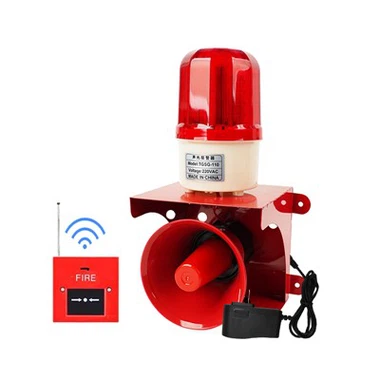
Dynamic warning: Solar-powered flashing lights installed at construction sites to improve visibility at night
Scene adaptation
Industrial Scene: Stainless steel materials is used in high temperature environment, explosion proof area mark must pass explosion proof certification.
Public places: the lower end of the safety exit sign is 1.8-2.5 metres from the ground, and the lower end of the exit sign in children's activity areas is 1.2-1.5 metres from the ground.
Traffic Scene: Warning signs should be set up 20-50 meters in advance (subject to speed adjustment), such as speed limit signs for school districts.
Installation specifications
Fortitude: The sign pole shall be determined by wind load calculation and shall be bolted securely.
Location options: Stay close to hazard source and avoid being blocked by doors or fences. For example, put a ``do not close"sign next to the distribution box.
When multiple signs coexist, they shall be arranged from left to right, from top to bottom, in the order of warnings, prohibitions, instructions and prompts.
Data support: One shopping mall reduced evacuation time from 5 minutes 30 seconds to 3 minutes 15 seconds by optimizing the layout of safety exit signs, increasing efficiency by 42%.
Iii. Industry Adaptation: Scenario Based Solutions
Different industries need to customize security marking systems according to their own risk characteristics.
1. Industrial manufacturing
Core requirements: safe operation of equipment, hazardous chemicals management
Solutions
Machining workshop: set up signs such as ``be careful of mechanical Injury '', ``must wear protective glasses' ', and use cordons to delineate dangerous areas.
Chemical plant area: Corrosion-resistant aluminum plate signs, 80 × 60cm safety warning card at entrance to critical hazard source areas.
Powertrain: Cylinder status identification panel made of thickened ABS plastic, perforated top for easy suspension.
Case in point: A automobile factory installed a "must wear a protective mask" sign in its welding shop, reducing eye injury accidents by 68%.
2. Public Buildings Sector
Core requirements: Personnel evacuation efficiency, emergency guidance
Solutions
Emporium: evacuation passage signs should be spaced no more than 20 metres apart and additional evacuation lane signs should be placed around corners. emergency evacuation floor plans are printed in high-definition acrylic.
Hospitals: "No entry" signs in operating theatre areas and biometric access control systems.
Schools: Labs use "anti-corrosion", "must wear protective shoes" and other signs, and choose anti-slip stickers as materials.
Data: The evacuation direction recognition accuracy increased to 98.7% after the application of AR navigation technology in Shanghai Tower.
3. Transport sector
Core requirements: dynamic identification, weather resistance
Solutions
Road traffic: warning signs are painted with a yellow-green fluorescent background to improve visibility in low-light conditions.
Rail services: "Be careful through customs" signs have been set on platforms, along with a voice reminder system.
In aviation field: "No Smoking or Fire" signs have been set on tarmac and luminescent materials have been used to ensure 24-hour visibility.
Case in point: a 41% reduction in rear-end accidents by optimizing the setting of warning signs on a particular highway.
4. Construction sector
Core requirements: interim risk management management, dynamic adjustment.
Solutions
Base pit operation: "Fallout proof", "No entry" signs with movable brackets (height 1.2-1.5 m).
Scaffolding area: Divided by red and yellow zebra crossings and marked with "dangerous" warning signs.
Nighttime construction: LED flashing lights are installed in hazardous areas to form a stereoscopic warning system.
Info: A construction site reduced high-fall rates by 55 percent by standardizing the use of safety signs.
IV. Maintenance management: full life Cycle Assurance
The validity of security signs depends on continued maintenance:
Inspection cycle: Normally once a month, fortnightly in high-risk environments such as chemical areas.
Update Standard: Replace as soon as deformation, fading, flaking or other conditions are detected. If the brightness of the reflective film aging, should be replaced as a whole.
Records management: set up ``security mark inspection ledger '', record inspection time, problem description and rectification measures.
Case: A chemical enterprise has increased the integrity of its logo from 72 per cent to 96 per cent through the implementation of a marking maintenance system.
Conclusion:
The selection of safety sign is a systematic project, which needs to take into account national standards, design scientificity and industry specificity. Through the establishment of the wholechain management system of ``compliance architecture --precision design --scene adaptation --dynamic maintenance '', the security sign has made a leap from ``visual presence"to ``functional efficiency ''. Under the background of digital transformation, through the integration of new technologies such as AR navigation and intelligent sensing, security signs are developing in the direction of intelligentization and interaction, providing more powerful guarantee for safe production.