Do Home Security Signs Help?
May 15, 2025
Home safety signs are helpful in raising safety awareness, preventing accidents and responding to emergencies, but their actual effect depends on the scenario, design and usage. The following is a specific analysis and suggestions:
I. Applicable scenarios and functions of home safety signs
1. Warning of dangerous areas and preventing daily accidents
Applicable scenarios:
Areas prone to accidents such as stairways ("Be careful of the steps" and "Handrails have been reinforced"), balconies ("No climbing"), kitchens ("Gas danger, turn off after use"), and bathrooms ("Be careful of slippery floors").
Drawers for storing medicines and detergents ("Toxic, do not touch"), electrical boxes ("Do not touch"), and kettles ("High temperature danger").
Function:
It plays an intuitive reminder role, especially for children, the elderly or people with visual impairments. For example, using cartoon stickers to mark "Hot water is hot" can attract the attention of young children and reduce the risk of scalding.
Case: A study by the US CDC shows that the slip rate of the elderly in families with anti-slip signs in the bathroom is reduced by 23%.
2. Emergency guidance, shortening reaction time
Applicable scenarios:
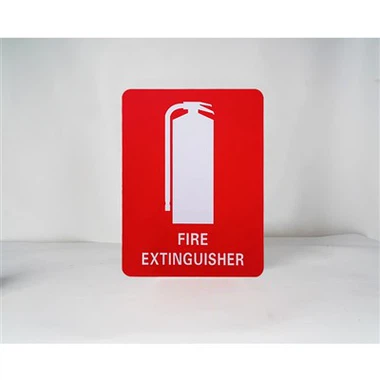
Escape route (marked with fluorescent arrows "safe exit" pointing to the door/window), fire extinguisher location ("fire extinguisher here"), first aid kit storage ("first aid supplies").
Earthquake emergency kit location ("earthquake emergency supplies"), gas valve closing mark ("emergency closing direction").
Function:
In emergency situations such as fire and earthquake, visual signs can help panicked family members to act quickly. For example, Japanese families generally post fluorescent escape arrows in the corridor, and children's evacuation speed in earthquake drills has increased by 40%.
The effect is significant at night: signs using fluorescent materials are still visible when the power is off, avoiding getting lost in the dark.
3. Customized tips for families with special needs
Applicable scenarios:
Families with allergy patients ("Pets are not allowed in this area"), families with chronic disease patients ("First aid medicine location" "Regular medication required").
Smart home devices ("Fingerprint lock operation prompts" "Camera monitoring area").
Function:
Help visitors or temporary caregivers quickly understand the special rules of the family. For example, elderly people living alone can put a "daily medication reminder" sign on the refrigerator to reduce the risk of missing medication.
2. Limitations and precautions of home safety signs
1. Overuse may lead to "visual numbness"
Risk:
If there are too many or cluttered signs (such as stickers all over the wall), family members may get used to it and ignore key information.
Suggestions:
Set 1-2 core signs in key areas (such as stairs and kitchens) to avoid information overload.
Change the style or position of signs regularly (such as adjusting the color of escape arrows every six months) to keep it fresh.
2. Need to combine actual safety education
Key issues:
Signs are only visual cues. If family members do not understand their meaning, the effect will be greatly reduced. For example, children may not recognize the "No Climbing" icon and need to cooperate with language education.
Action suggestions:
After installing the sign, demonstrate it through a family meeting (such as a simulated fire escape) to ensure that everyone understands the purpose of the sign.
Use concrete signs for young children (such as the "flame + prohibition symbol" icon with the text "fire is hot").
3. Material and location affect practicality
Material selection:
Waterproof materials (such as PVC stickers) are required in wet areas such as bathrooms and kitchens; avoid using flammable materials in high-temperature areas (such as next to ovens).
Location requirements:
The height should be consistent with the line of sight of family members: children's signs can be posted at 0.5-1 meters (such as cabinet drawers), and adult signs can be posted at about 1.5 meters (such as walls).
Escape signs should avoid being blocked by furniture to ensure that the entire passage is visible.
III. Alternative and supplementary solutions for home safety signs
1. Physical protection takes precedence over signs
Example:
Adding guardrails (physical protection) to balconies is more effective than simply posting "No climbing";
Installing anti-electric shock covers (physical isolation) on electrical sockets is more reliable than "Danger Do Not Touch" signs.
Principle: Signs are auxiliary means and cannot replace safety facilities (such as smoke alarms, fire extinguishers, anti-theft locks).
2. Combination of technology products and signs
Smart solution:
Set up an NFC tag next to the sign, scan the code to view detailed safety instructions (such as a video on how to use a fire extinguisher);
Link with a smart speaker, and when you are close to the "Gas Danger" sign, an automatic voice reminder "Please check the valve" will be given.
3. Regular drills to strengthen memory
Recommended frequency:
At least one family emergency drill per year (such as fire escape and first aid procedures), combined with actual practice of the sign position.
After each new sign is added, conduct a scene simulation immediately (such as teaching the elderly to recognize the "First Aid Box" sign and demonstrating how to take medicine).
IV. Design and purchase recommendations for home safety signs
Visual design principles:
Color: Red for danger warnings (such as "Prohibition"), green for safety instructions (such as "Escape Direction"), and blue for general prompts.
Icon: Give priority to using international common symbols (such as ISO safety signs) to avoid misunderstandings caused by self-created graphics.
Text: Concise and clear, mainly in Chinese (such as "Open the door to escape" instead of complex sentences).
Homemade vs. purchased:
Simple warnings can be made by yourself (such as printing with colored paper and sticking on the refrigerator);
For professional scenarios (such as fire signs), it is recommended to purchase regular products that meet the GB 13495.1 standard (with fire certification marks).
Child-friendly design:
Replace pure text with cartoon patterns (such as a little bear holding a "be careful of the steps" sign);
Allow children to participate in the design (such as drawing a "safe corner" sign together) to enhance participation.
Summary: Set up as needed and focus on effectiveness
Recommended use scenarios:
Families with children, the elderly or people with limited mobility;
Duplex/multi-story houses (need to clarify staircase safety tips);
For families with weak emergency response capabilities (such as young people living alone, first-time home buyers).
Over-reliance is not recommended:
Signs cannot replace active safety management (such as regular circuit inspections and cleaning of balcony debris);
Families dominated by adults can focus on "accurate tips for key locations" (such as electrical boxes and gas valves) to avoid redundancy.
Reasonable setting of home safety signs is like adding "visual insurance" to your life, but it needs to be combined with actual needs so that the signs become "visible safety reminders" rather than formal decorations.